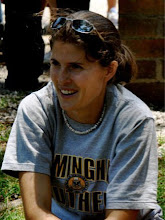
So, a week ago today, my friend Karina was traveling with her aunt in Iquitos, a city in the Peruvian jungle (on the Amazon River, actually - the biggest city in the world inaccessible by road, if you're interested). But she received some tragic news. Last Monday, at about 5:30 pm, her grandfather passed away after being hit by a mototaxi that morning. A mototaxi is the Peruvian equivalent of a rickshaw - basically a motorcycle pulling a covered, 3-seated cart. He was brought from Casa Grande, the town where he lived, into Trujillo (abou 45 minutes-1 hour away), but they couldn't get him stabilized and he passed away before the could operate.
I can't imagine getting that phone call about your grandfather when you're hundreds of miles away and, because of flight/bus schedules and tickets, can't get there for 36 hours. On top of all this, Karina's grandparents essentially raised her, so this man was more like her father than her grandfather. She got to Trujillo Wednesday morning, with barely enough time to see her family and begin to process things before the velorio (viewing) and entierro (burial). And it was probably the most intense funeral I've ever been to. Several family members, including Karina, were distraught, and it was really difficult to see someone such a close friend in that much pain.
I just wanted to take it away, to share it, to know what to say or do to make it better. And I realized that I can't. I mean, I can be there for her - and don't get me wrong, I know what a huge gift that can be - but I can't heal her hurt. And that was a helpless, humbling place to be. But I think it helped me realize better that there is only One who can. And I'll be praying for and walking with her through that process.
Since last Wednesday, Karina has been better. She's been gracious to express sincere thanks for friendship and support, she hasn't let herself be swallowed by sorrow, she has allowed herself to talk about her grandfather - the kind of man he was, how he made her laugh, memories with him, confusion about the grieving process, openness about how she feels, honesty about questions as well as about her faith, hope, and the opportunity this tragedy could offer. I'm impressed. I can't imagine what it would be like to lose someone like that, and it will take her a long time to get through it. But I'm thankful for the person she is and for the chance to be here with her now.
Monday, February 7, 2011

Sunday, January 23, 2011
Marinera
Currently in Trujillo, the Marinera Festival is going on. It started about a week ago, and it will continue this week with an international competition in the Plaza de Toros. The marinera is one of Peru's traditional dances (called the "National Dance of Peru") and, although it has different styles that hail from distinct cities and regions, this coastal dance is particularly characteristic of Trujillo. The two go together like Idaho and potatoes, D.C. and the White House, Texas and the two-step. When you say "Trujillo," you think "marinera."
All this week, they've had rehearsals (ensayos) open to the public at a nearby club. Not wanting to miss this typically Trujillan tradition, I decided to take advantage of the last night of rehearsals last night. It was great. Other observers packed the small stands surrounding a gym-like space, and couples filled the floor practicing their paces to the tunes of the Trujillo municipal band. In typical marinera, the man is dressed in "chalan" clothing, or a sort of formal, old-fashioned rancher costume, complete with a wide-brimmed straw hat. The women dance barefoot and wear traditional dress from their region, including a flowy skirt ideal for catching up and swishing dramatically. Both partners carry a white handkerchief, which they wave and twirl with a flourish. The participants for the rehearsal weren't dressed in their costumes, but they all had their handkerchiefs, and lots of the men and boys used their hats. The dance is bien coqueto (pretty flirty), as it's meant to reenact the different steps of a courtship ritual.
I love watching people dance, and you could tell that everyone on that floor - from the elderly to the teenagers to the 5-year-old couples striding sharply and flirtatiously - was enjoying what they were doing. That was the best part. A caller announced which type of marinera would be played, and then the floor was a sea of twirling handerchiefs, swirling skirts, spinning steps, sharp taps, and quick flicks of wrists and skips of feet. Enjoy these pictures and videos to give a little taste of Trujillo's marinera.

Demonstration by a young (I think Peruvian) couple from Spain.

 This little guy was so cute. He will undoubtedly be on the dance floor in just a few years.
Tuesday, January 11, 2011
Generosity
Anywhere you go, you meet all kinds. But, within the last week, I have been struck several times by the open, spontaneous, natural generosity of Pervians. Last week at the clinic, after staying late to make a home visit to Fermin, Noemi (one of the nurses) suggested we get lunch together back in Trujillo. Having planned to eat at home, I hadn't brought enough money for lunch. Without a second thought, she immediately invited to treat me, and we enjoyed a delicious menu (cheap, fixed price lunch meal) downtown - much needed by 3 pm! And then she bought me an ice cream cone.
Saturday, at the central market, I was standing at a booth, undoubtedly calculating the cheapest possibility of getting my desired combination of produce. A humble, elderly gentleman, stooped over the ragged basket of lemons he was selling, asked to be excused as he tried to pass. Still focused on my vegetables, I moved aside to give him room on the narrow aisle but declined his offer to buy any lemons. However, the lady from whom I was buying immediately reached over and gave him some coins. I felt about the size of a grain of dirt.
Then, yesterday I was sitting next to a woman in the combi on the way back from Wichanzao. Her mother passed away last week, and she was heading back to her home in Jaen today. After talking most of the ride back to Trujillo, she thanked me for the work I am doing and, before I realized what what was happening, she had already paid my pasaje to the cobrador who takes everyone's bus fare. I can tell you that often, this work I'm doing feels much smaller than the voluntary acts of encouragement and kindness I see and have received, like that from this lady yesterday, given without reservation or a second thought.
Would I have done the same? And another thought came to me, as well: what am I saving my money for? Financial responsibility and frugality are important - I firmly believe that and, I think, often even hold a little too tightly to that principle. I think it's fine to look for a good deal on vegetables in the market, especially if I'm trying to make sure what I save is going to a good cause like the Wichanzao clinic or a food offering at church. But, even though these are good things, being too stubbornly fixed on giving only to "this" or "that" can impede the beauty and sincerity of spontaneous generosity. Lord, forgive me for focusing so much on the lower prices, even out of well-intended motivation, that I fail to notice and give your love freely to the elderly, those in need, or a traveler in a strange land.
This year, I want to live more like a Peruvian.
Saturday, at the central market, I was standing at a booth, undoubtedly calculating the cheapest possibility of getting my desired combination of produce. A humble, elderly gentleman, stooped over the ragged basket of lemons he was selling, asked to be excused as he tried to pass. Still focused on my vegetables, I moved aside to give him room on the narrow aisle but declined his offer to buy any lemons. However, the lady from whom I was buying immediately reached over and gave him some coins. I felt about the size of a grain of dirt.
Then, yesterday I was sitting next to a woman in the combi on the way back from Wichanzao. Her mother passed away last week, and she was heading back to her home in Jaen today. After talking most of the ride back to Trujillo, she thanked me for the work I am doing and, before I realized what what was happening, she had already paid my pasaje to the cobrador who takes everyone's bus fare. I can tell you that often, this work I'm doing feels much smaller than the voluntary acts of encouragement and kindness I see and have received, like that from this lady yesterday, given without reservation or a second thought.
Would I have done the same? And another thought came to me, as well: what am I saving my money for? Financial responsibility and frugality are important - I firmly believe that and, I think, often even hold a little too tightly to that principle. I think it's fine to look for a good deal on vegetables in the market, especially if I'm trying to make sure what I save is going to a good cause like the Wichanzao clinic or a food offering at church. But, even though these are good things, being too stubbornly fixed on giving only to "this" or "that" can impede the beauty and sincerity of spontaneous generosity. Lord, forgive me for focusing so much on the lower prices, even out of well-intended motivation, that I fail to notice and give your love freely to the elderly, those in need, or a traveler in a strange land.
This year, I want to live more like a Peruvian.
Wednesday, January 5, 2011
Returning
I wasn’t sure how being back in the States for Christmas would be, but it turned out to be really nice. It included a very enthusiastic welcoming committee at the airport, a day at Pickwick, seeing friends in Tupelo and Birmingham, and mostly lots of family in and around the Rice house for various birthday and Christmas gatherings. Although many days were pretty busy, it was really nice to see everyone and spend the holidays there. Plus, it was just about worth the ticket home to see Tupelo’s white Christmas.


The trek back south went smoothly (despite almost missing a flight due to a delay) until fog in Trujillo limited visibility enough to force our plane to wait on the runway in Chiclayo (a nearby city) for almost 3 hours while the flight crew tried to decide if we should try to land in Trujillo or go back to Lima. Much of this time was spent by listening to a large group – almost every passenger, in face – of very opinionated Peruvians contributing their two céntimos as to whether to stay in Chiclayo, try Trujillo, or return to Lima. Because apparently these decisions are made by committee. I could only laugh and go back to sleep. Eventually, we had an unsuccessful attempt at landing in Trujillo, went back to Lima, and eventually made it to Trujillo on a later flight. Upon finally landing, Trujillo never looked so beautiful.
Exhausted as we were (Heidi and Seth were on the same flight), I had to get out an d move to cure myself of 30 hours of traveling. So I went for a run. And fell in an uncovered hole on the sidewalk accessing the water main. Long story short, I got a pretty good cut on my shin and spent part of my New Year’s Eve getting a few stitches in the office’s library (after a delicious supper at the Ueltscheys). Thankfully, I know some good doctors here, and Julton was kind enough to sew me up. And, although I was taking it easy, I still enjoyed ringing in 2011.
Exhausted as we were (Heidi and Seth were on the same flight), I had to get out an
 d move to cure myself of 30 hours of traveling. So I went for a run. And fell in an uncovered hole on the sidewalk accessing the water main. Long story short, I got a pretty good cut on my shin and spent part of my New Year’s Eve getting a few stitches in the office’s library (after a delicious supper at the Ueltscheys). Thankfully, I know some good doctors here, and Julton was kind enough to sew me up. And, although I was taking it easy, I still enjoyed ringing in 2011.
However, after having to say goodbye to family (which was more difficult than I'd expected) and traveling so long, that mishap was definitely not the first thing I wanted my first day back in Trujillo. Thankfully it really wasn’t bad, and I didn’t break anything, but I found myself asking “Why today?” I don’t know. But it did make me stop and think a little more. As much as I’d like to convince myself otherwise, I don’t have it all figured out just because I’ve already been here 5 months. I still can’t do this on my own strength. Nor should I. So my prayer for this new year is that I would not be concerned with doing a lot of important, significant things myself. While certainly taking seriously my work and responsibility to help here as much as possible, I hope my focus is more on Christ: sincerely growing in my relationship with Him, seeing Him be significant, and letting that be enough. Through that process, I trust that He will work in and through me. But I hope some arbitrary proof of my own work's importance is not my focus; rather, that I just seek Jesus. Because He can – and is – at work in bringing God’s kingdom.
So I guess I can deal with a few stitches for awhile. And it’s nice to enjoy a week that’s a little more relaxed without having to teach. It’s been helpful in getting settled again to reunite with the other interns, see some friends, and get back to work at the clinic. It's great to see everyone again. Below are a couple of pictures: the first, when Heidi and I took Linda (our new roommate) on an adventure to Las Delicias, a nearby beach where we saw some absolutely monstrous waves; the second, passing through the Plaza de Armas, still adorned with the trees and decorations from Christmas. Sometimes, you’ve just got to love Perú.
So I guess I can deal with a few stitches for awhile. And it’s nice to enjoy a week that’s a little more relaxed without having to teach. It’s been helpful in getting settled again to reunite with the other interns, see some friends, and get back to work at the clinic. It's great to see everyone again. Below are a couple of pictures: the first, when Heidi and I took Linda (our new roommate) on an adventure to Las Delicias, a nearby beach where we saw some absolutely monstrous waves; the second, passing through the Plaza de Armas, still adorned with the trees and decorations from Christmas. Sometimes, you’ve just got to love Perú.
As I get a feel for things, I’ll try and synthesize some goals for my work at the clinic and the rest of my time here. So, if I get ambitious, be on the lookout for that soon. I wish you and yours a very blessed 2011. (Can you believe we’re there?!)
Thursday, December 16, 2010
Surprises
There have been a few of those this week. Here's a recap.
Monday: After a long, kind of rough day, I was slightly grumpy and my dear friends were kind enough to be patient through this spell. Probably it helped that they knew they were giving me a surprise birthday party that night. A bunch of people came to the office after SALI and surprised me with bocaditos, singing Feliz Cumpleaños, and a delicious chocolate-cherry cake (including the Peruvian tradition of pushing it in your face as you lean down to take the celebratory first bite). It helps when your suprise birthday party is more than a week in advance of your actual birthday. But I wasn't going to be in Trujillo for my birthday, so they wanted to recognize it. I have some great friends.
Tuesday: We had an Amigo Secreto (Secret Santa) party among the staff at the clinic. It was a lot of fun - everyone standing up and giving clues/saying nice things about their secret friend before giving them their gift. It was Daniel's despedida, too, since he's not coming back after Christmas (per continuing dental school), so people said nice things about him too. Then I got a sweet card and a T-shirt from everyone for my birthday, which was a sweet surprise. Plus, Delvith, the lady who sells papas rellenas and tamales outside the clinic everyday, had made me a purse! Very sweet. It's red, which is fun, and quite appropriate for the season.
Wednesday: Instead of having class, I met my basic English class to go eat since it was the last day. Before heading out, I asked Flor exactly the time of my flight from Trujillo to Lima the next day. I thought it was around 10 pm. Turns out it was at 6:25. Good thing I asked.
Thursday: I went with don Jose, one of the clinic's patients, to the hospital to get the pathology results from a biopsy they took Monday at the Ear/Nose/Throat consultorio at the hospital. He'd had a pretty nasty tumor grow in his nose within the past couple of months. Found out today it is NOT cancerous. Hooray! Thank the Lord. Then I got back in time for the chocolatada at the clinic for the patients. Lots of kids enjoying hot chocolate and paneton, the Peruvian Christmas bread. Good times.
Now I'm in the Lima airport. Long night, but it's going ok so far. I took a nap, which was helpful. I'm hoping for some sleep on the plane. It's a little strange... I'm really looking forward to spending Christmas with my family in Tupelo, but I don't want to leave Trujillo. I guess that's a good thing, huh? It'll be a great couple of weeks. There's a lot that doesn't feel like Christmas when it's not cold, no fires, no Christmas tree (although it makes me happy when I see them). I'm looking forward to Christmas music, lights, family, friends, warm clothes, and good food. And heading back to Trujillo in 2 weeks.
Monday: After a long, kind of rough day, I was slightly grumpy and my dear friends were kind enough to be patient through this spell. Probably it helped that they knew they were giving me a surprise birthday party that night. A bunch of people came to the office after SALI and surprised me with bocaditos, singing Feliz Cumpleaños, and a delicious chocolate-cherry cake (including the Peruvian tradition of pushing it in your face as you lean down to take the celebratory first bite). It helps when your suprise birthday party is more than a week in advance of your actual birthday. But I wasn't going to be in Trujillo for my birthday, so they wanted to recognize it. I have some great friends.
Tuesday: We had an Amigo Secreto (Secret Santa) party among the staff at the clinic. It was a lot of fun - everyone standing up and giving clues/saying nice things about their secret friend before giving them their gift. It was Daniel's despedida, too, since he's not coming back after Christmas (per continuing dental school), so people said nice things about him too. Then I got a sweet card and a T-shirt from everyone for my birthday, which was a sweet surprise. Plus, Delvith, the lady who sells papas rellenas and tamales outside the clinic everyday, had made me a purse! Very sweet. It's red, which is fun, and quite appropriate for the season.
Wednesday: Instead of having class, I met my basic English class to go eat since it was the last day. Before heading out, I asked Flor exactly the time of my flight from Trujillo to Lima the next day. I thought it was around 10 pm. Turns out it was at 6:25. Good thing I asked.
Thursday: I went with don Jose, one of the clinic's patients, to the hospital to get the pathology results from a biopsy they took Monday at the Ear/Nose/Throat consultorio at the hospital. He'd had a pretty nasty tumor grow in his nose within the past couple of months. Found out today it is NOT cancerous. Hooray! Thank the Lord. Then I got back in time for the chocolatada at the clinic for the patients. Lots of kids enjoying hot chocolate and paneton, the Peruvian Christmas bread. Good times.
Now I'm in the Lima airport. Long night, but it's going ok so far. I took a nap, which was helpful. I'm hoping for some sleep on the plane. It's a little strange... I'm really looking forward to spending Christmas with my family in Tupelo, but I don't want to leave Trujillo. I guess that's a good thing, huh? It'll be a great couple of weeks. There's a lot that doesn't feel like Christmas when it's not cold, no fires, no Christmas tree (although it makes me happy when I see them). I'm looking forward to Christmas music, lights, family, friends, warm clothes, and good food. And heading back to Trujillo in 2 weeks.
Saturday, December 4, 2010
Much to be Thankful for
... not one of which, for you guys anyway, is my failure to post recently. But it's been a great - if busy - few weeks. Let me tell you why.
First, I'm in Peru. But you already knew that. Second, Thanksgiving happened. Which you probably already knew, too. But it's a little different (and kind of comes unexpectedly) when there aren't the cues of crisp, fall air, crunchy leaves, pumpkins in the stores, or any general talk of the holiday to clue you in on its impending arrival. Nevertheless, although without the normal atmosphere or pomp and circumstance, we still had a nice day. The gringo missionary families and a few friends celebrated together and, don't worry, stepped up to the difficult task of still eating as much as possible. And it was good. Including my first-ever nibble of fried turkey. Did you know some people fried turkeys?
The other really exciting thing was the beginning of Thanksgiving week. My two dear friends Haley Mills and Katelyn Hancock, who put up with living with me for 3 years of college, came to Peru. We missed the lovely Kristing Hendricks, the other 1/4 that completes our Sweet Suite, but it was wonderful getting to see such good friends and experience some (more) great memories together. They didn't make it to Trujillo, but I met them in Lima about midnight Saturday, and thus began our 4 full days of awesome-ness and very little sleep. This included catching up and falling asleep in the airport, arriving in Cusco early Sunday morning, taking combis and micros through the Sacred Valley (stopping at the really cool market in Chinchero, seeing the salt wells in Urubamba, and taking the train from Ollantaytambo to Aguas Calientes. This was all on Sunday. :)


So, as Aguas Calientes is the tourist trap where everyone going to Machu Picchu has to stay, Monday started REALLY early (don't ask) with the hike up to Machu Picchu. We got there in time for the park to open, at which point it started raining. Undeterred, we entered anyway, waited in a little hut, huddled over our guidebook learning about MP until the rain and clouds lifted enough for us to actually see and enjoy it. This, however, did not happen, so we gave positive attitudes a valient effort, got cold and wet, and then decided to try and wait it out some more. I'll spare you the details, but it's a good story and we met some cool people, and eventually the sun did come out to give us a gorgeous day - quite a blessing. Although, in hindsight (especially after knowing the part about the sun coming out later), it was pretty cool to see this ancient, mystic place shrouded in clouds and mist. And we climbed Huana Picchu, the mountain behind the ruins, and kind of felt on top of the world.


So that was an exhausting but awesome day. And the next morning was really early (again) to head take the train back to Ollantaytambo from Aguas Calientes. But it was worth every hour of sleep lost to see the sun rise over the mountains on that train ride. Rivaled Machu Picchu itself, believe it or not. Absolutely gorgeous.

So, we took advantage of the rest of the day together, enjoying a cool cafe and some more ruins in O-town, then some choclo con queso and a couple of hours exploring the city when we arrived back in Cusco. And Katelyn and Haley tried cuy (guinea pig, for those who might not know) that night for our declared Thanksgiving dinner. His name was Pepe, in case you're interested.
Oh yes... I am blessed beyond belief.
Thursday, November 18, 2010
Lost in Translation
Last week was an interesting week - a little different than the normal schedule, and even when I was in the clinic, it was a madhouse with a lot of people around so it definitely kept us all busy. But it's good that way...I mean, not good that people are sick, but good that if they are, they come to us.
So, one reason things were so crazy around the clinic is because there was a short-term team from the Chicago area in town doing construction work in Wichanzao. They took over the top floor of the clinic, leaving us with less space for all the patients while they were there, but also leaving us with a beautiful new tiled floor on the 2nd floor and some improvements to a few things that we had been needing for awhile (e.g. a water heater in the shower - don Jose will be so happy when we bathe him next and don't have to do it in the bathroom!). Part of the group also worked all week on the manse for Pastor Juan (the preacher at the Wichanzao church) and his family. They've been living in the Sunday school rooms at the church, so it will be nice for them to actually get to move into a house soon. Lenin, the mission architect, and his Peruvian crew are working their magic and will hopefully have it ready for them to move in within a couple of weeks.
My schedule was a little off as well because Monday and Wednesday I helped all day at a wheelchair campaign at a church downtown. An organization called Wheelchairs for the World, who distributes chairs all over the world, brought a team down and, with the work of physical therapists and wheelchair mechanics, matched patients to wheelchairs and made sure the chairs were comfortable and appropriate to meet the person's needs. Some were simple and only needed a chair to get around outside or go long distances; other people had been confined to bed, unable to move on their own, and now their families can wheel them around and give them more mobility. It was really interesting to meet and talk with so many people - immobility, like health in general I suppose, does not discrimminate. There was a paralyzed man from a mountain town whose brother brought him; a young man with cerebral palsy whose next-door neighbor and best friend (he's like my brother) accompanied him on the 6-hour drive from the mountains to get his chair; an elderly lady from Trujillo who couldn't get out of the house and can now maneuver her chair by herself; a 5-year-old girl with cerebral palsy; a middle-aged woman who had polio as a child, but now owns her own little shop and gets around on her wheelchair (including in and out of taxis on a home-made slideboard) just fine; and an industrial engineer who had had a stroke a year and a half ago and now can't move on his own at all. This last one really struck me because his brother brought him, and later his wife came after picking up their kids from school. Both of them were very sweet and supportive of him. He and his wife Ana have four kids and, although this has some trouble speaking now, he's still obviously very intelligent, and even spoke some English he remembered to the physical therapist.
I was translating for this campaign two days and one day in the clinic for a doctor who came with the Chicago group. I decided I like translating. It was pretty exhausting, and I definitely made mistakes and needed help sometimes, but it was need to get to see these different patients, be a part of helping them get what they needed, and, especially in the case of the wheelchair campaign, just being able to talk with and get to know some of these people. Hopefully I'll get a chance to do some more of that soon. Although I don't think I have to worry about that. :)
The other thing last week made me think of was the concept of short-term mission teams. We read a book with the intern group a couple of months ago called When Helping Hurts. It's a very interesting book, and it brought up some potential criticisms for short-term groups that come in, "dump" their help (whether it be money, resources, or a service), and then leave. I'd thought about that before, and I agree there is the risk that short-term teams can take away from the responsibility, initiative, and dignity of a community if they offer what appears to be helpful but in reality is not meeting the underlying needs. Plus there's the issue of commitment and relationship that is often absent if the only contact is built around a single one- or two-week trip. However, I think both of these groups - the team from Chicago and Wheels for the World - demonstrated the right way to do it. They've both been coming continuously, for several years to the same place, and they have established a relationship with the people here. Also, they both worked really hard - definitely had fun, but took their work seriously and effectively accomplished a lot to meet actual needs people had. And finally - one of, I think, the most effective ways to have an impact as a short-term team - they both came down through organizations that are established in Trujillo, that are staffed by locals who know the culture, the situation, and the needs of their community. Instead of working for the people, the groups work with them, resulting in a mutual exchange of blessings, appreciation for one another, and meeting of needs. I think that's the great thing about how God works when we're available for him to use us. Somehow, we all get blessed.
So, one reason things were so crazy around the clinic is because there was a short-term team from the Chicago area in town doing construction work in Wichanzao. They took over the top floor of the clinic, leaving us with less space for all the patients while they were there, but also leaving us with a beautiful new tiled floor on the 2nd floor and some improvements to a few things that we had been needing for awhile (e.g. a water heater in the shower - don Jose will be so happy when we bathe him next and don't have to do it in the bathroom!). Part of the group also worked all week on the manse for Pastor Juan (the preacher at the Wichanzao church) and his family. They've been living in the Sunday school rooms at the church, so it will be nice for them to actually get to move into a house soon. Lenin, the mission architect, and his Peruvian crew are working their magic and will hopefully have it ready for them to move in within a couple of weeks.
My schedule was a little off as well because Monday and Wednesday I helped all day at a wheelchair campaign at a church downtown. An organization called Wheelchairs for the World, who distributes chairs all over the world, brought a team down and, with the work of physical therapists and wheelchair mechanics, matched patients to wheelchairs and made sure the chairs were comfortable and appropriate to meet the person's needs. Some were simple and only needed a chair to get around outside or go long distances; other people had been confined to bed, unable to move on their own, and now their families can wheel them around and give them more mobility. It was really interesting to meet and talk with so many people - immobility, like health in general I suppose, does not discrimminate. There was a paralyzed man from a mountain town whose brother brought him; a young man with cerebral palsy whose next-door neighbor and best friend (he's like my brother) accompanied him on the 6-hour drive from the mountains to get his chair; an elderly lady from Trujillo who couldn't get out of the house and can now maneuver her chair by herself; a 5-year-old girl with cerebral palsy; a middle-aged woman who had polio as a child, but now owns her own little shop and gets around on her wheelchair (including in and out of taxis on a home-made slideboard) just fine; and an industrial engineer who had had a stroke a year and a half ago and now can't move on his own at all. This last one really struck me because his brother brought him, and later his wife came after picking up their kids from school. Both of them were very sweet and supportive of him. He and his wife Ana have four kids and, although this has some trouble speaking now, he's still obviously very intelligent, and even spoke some English he remembered to the physical therapist.
I was translating for this campaign two days and one day in the clinic for a doctor who came with the Chicago group. I decided I like translating. It was pretty exhausting, and I definitely made mistakes and needed help sometimes, but it was need to get to see these different patients, be a part of helping them get what they needed, and, especially in the case of the wheelchair campaign, just being able to talk with and get to know some of these people. Hopefully I'll get a chance to do some more of that soon. Although I don't think I have to worry about that. :)
The other thing last week made me think of was the concept of short-term mission teams. We read a book with the intern group a couple of months ago called When Helping Hurts. It's a very interesting book, and it brought up some potential criticisms for short-term groups that come in, "dump" their help (whether it be money, resources, or a service), and then leave. I'd thought about that before, and I agree there is the risk that short-term teams can take away from the responsibility, initiative, and dignity of a community if they offer what appears to be helpful but in reality is not meeting the underlying needs. Plus there's the issue of commitment and relationship that is often absent if the only contact is built around a single one- or two-week trip. However, I think both of these groups - the team from Chicago and Wheels for the World - demonstrated the right way to do it. They've both been coming continuously, for several years to the same place, and they have established a relationship with the people here. Also, they both worked really hard - definitely had fun, but took their work seriously and effectively accomplished a lot to meet actual needs people had. And finally - one of, I think, the most effective ways to have an impact as a short-term team - they both came down through organizations that are established in Trujillo, that are staffed by locals who know the culture, the situation, and the needs of their community. Instead of working for the people, the groups work with them, resulting in a mutual exchange of blessings, appreciation for one another, and meeting of needs. I think that's the great thing about how God works when we're available for him to use us. Somehow, we all get blessed.
Subscribe to:
Posts (Atom)