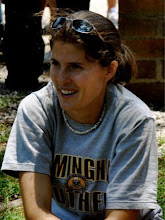


We have a patient at the clinic named don José. He's not wearing his trademark hunter orange cap or his mischievous grin in this picture, but you can at least see is face. Don Jose is in his early 80s and, since a couple of major surgeries he had about a year ago, he’s been close to the heart of everyone at
The problem, however, is that if your condition is not emergent, it’s difficult for it to become a priority. So, for the past few months, don Jose has been attending sporadic doctors appointments and hospital visits, jumping through the necessary hoops to get his surgery scheduled. It’s been a frustrating process, especially learning which lines to wait in, whom to ask what questions, and then which line to wait in next. Often, even after a few hours of this process, you might still leave the hospital with a “Your appointment will be next week” or “Come back in two weeks to schedule the surgery. There are no rooms available right now.” And I imagine that if I, unfamiliar with the language and process as I am, am frustrated with and confused by the inefficient process of bouncing from line to line like a pinball, it must be incredibly overwhelming for someone without much exposure to or education of the health care environment.
Yet, the perseverance, the patience – perhaps it’s submission engrained by years of disappointment and being told to wait – I see in everyday people inspires me. Granted, there are those who jump to the front of the line, who gripe and complain. But there are also those who, after getting to the hospital at 5 am, leave at noon without the appointment they hoped for. And then they come back and do it again.
It’s pretty sad. And the system of having to ask all the questions and make all the appropriate arrangements yourself doesn’t work. But I’ve learned a lot by watching the people waiting with me. They shouldn’t have to wait, look confused as they’re brushed off as some other department’s responsibility, and then come back for another round the next day. But they wait patiently. And they come back. And so, in my relatively painless bouts of waiting a couple of hours for the doctor or getting up the nerve to call him day after day to see if he was able to get a surgery date for don José yet, I thought about those faces.
And it reminded me of Jesus’s parable about the woman continuing to ask the judge or the neighbor who refused to stop knocking until his friend gave him some bread. I didn’t want to be a pestering bother, but I couldn’t stop knocking, couldn’t stop asking. I think perseverance is definitely a lesson in humility. But it’s also hopeful. Because we have a Savior who wants to help us, who waits for our knock, our call, our request. Sure, it might still require perseverance and patience. It might not happen in the timeline we think it should. But if even the stern judge, the reluctant neighbor, and the busy ENT surgeon finally give in to a persistent request, won’t our Father who loves us be so much more ready to do the same?
I hope you have a beautiful Easter.
A couple of Saturdays ago, several of us had a unique opportunity to spend time with a gentleman named Francisco. Don “Panchito” is a 79-year-old patient at the clinic who collects recycling for a living and lives in a 4.5 m2 adobe brick squatter house in Wichanzao. But more than that, he’s a sweet guy who works hard, cracks jokes, and always expresses his genuine appreciation. Which is one reason why, when we found out that his roof (one layer plastic, one layer woven straw material) had collapsed, we wanted to help.
So, after consulting with Pastor Juan from Wichanzao church, collecting some money and volunteer interest, and checking out materials, we headed to don Panchito’s house to give the project a shot. We ended up having a good group of 15 or 20 people, consisting of several people from the clinic, the Wichanzao church, SUSA and Cristo Rey, and a couple of his neighbors.
We thought the primary job would be replacing the remains of his old roof with sheets of tin, or calamina. Of course, that was the main task, and the more experienced guys did a great job with its construction. However, I found myself in an interesting role: emptying shovelfuls of debris from don Panchito’s house. You see, the house was full to the top of everything you can possibly imagine, and this man had literally been living in a trash dump. Some things he had piled to the ceiling to keep his roof from falling completely, some things he was saving to recycle or sell, and some things I think he just didn’t know what to do with. It was definitely intimidating to see the house so full and to think about beginning to make it more livable.
At first, don Panchito didn’t even want us to take anything out. “I’ll take care of it. Don’t trouble yourself. There are probably rats and fleas. I can take things out little by little.” But we eventually coaxed him into letting us clean a little bit of it. Although we left a lot in there, the room has much more space now, and there’s at least clear path to his bed. It was hard finding the balance between respecting his dignity and right to make decisions and convincing him that he didn’t deserve to be living in such conditions. Plus, a lot of what looked like junk to our eyes was a valuable piece of plastic, glass, or iron to be sold, or even a meaningful memoir or possession to treasure. So we had to be careful, to respect, to receive his guidance, to look through his eyes. And I’m sure, at the end of the day, it was hard – probably even embarrassing – to see so much that had been filling his house piled on the road for all to see.
The entire experience actually convicted several of us, and we realized how much we are like don Panchito. We get accustomed to seeing the messy realities of those around us and, especially, to living in our own trash dumps: bad habits, broken relationships, resentment, bitterness, mistakes, regret, addictions, complacency. It’s too hard to fix, we’re too far down that road, it’s really not that bad, I’m doing alright like I am, I’m working on improving it. “I’ll take care of it. Really, I don’t need the help. It’s ugly in there. I can do it, little by little.” We’re ashamed to let the world see it. We don’t want help. What’s more, we don’t want to let go of the trash we’ve come to treasure. Surely we can do something good with it. Or at least it reminds us of something we once loved.
I’ve got to get better at updating this again…
But I do kind of have an excuse for part of the delay this time – I was out of town for one of the weeks. And the reason was a good one: my mom and dad came to visit! The interns had a week off from SALI, so my parents took advantage of the break and came to visit
Part of the fun, too, was taking public transportation, meeting lots of really nice people along the way, eating good Peruvian food, and just seeing them get to know Peru a little big (at least, as much as possible in the most touristy area of the country). After four days in Cusco and the Valley, we took a night bus to
Santa Catalina convent
But I really loved getting back to
Whew, it’s been quite a full few weeks! I apologize for being so far behind on updating. Here are a few highlights.
Celebrating the engagement of our friends Bruno and Briggith – they were thrilled to finally receive the go-ahead after being together since high school.
Sorry for the very brief run-through. It’s been a great couple of weeks, but definitely full. Maybe the comments and pictures will give you a taste. It’s cool to get to be a part of serving, building a variety of relationships, and just living here – even if it feels like life’s on steroids and running on fast-forward sometime. Thanks for your prayers and encouragement. Much love to you all.
P.S. Are the Bradford pears blooming yet?