Thursday, April 21, 2011

Perseverance


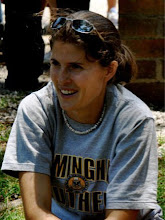
We have a patient at the clinic named don José. He's not wearing his trademark hunter orange cap or his mischievous grin in this picture, but you can at least see is face. Don Jose is in his early 80s and, since a couple of major surgeries he had about a year ago, he’s been close to the heart of everyone at Bethesda. Thankfully, he’s still mobile and self-sufficient, selling his candies every day at the Hermalinda market and regularly attending church at Wichanzao. However, in December, he came to use to let us know about some growths that appeared in his nose, nearly blocking his airways. After tests and scans, we were thankful that these tumors were benign, but the polyps do extend throughout his nasal and sinus cavities and need to be removed.

The problem, however, is that if your condition is not emergent, it’s difficult for it to become a priority. So, for the past few months, don Jose has been attending sporadic doctors appointments and hospital visits, jumping through the necessary hoops to get his surgery scheduled. It’s been a frustrating process, especially learning which lines to wait in, whom to ask what questions, and then which line to wait in next. Often, even after a few hours of this process, you might still leave the hospital with a “Your appointment will be next week” or “Come back in two weeks to schedule the surgery. There are no rooms available right now.” And I imagine that if I, unfamiliar with the language and process as I am, am frustrated with and confused by the inefficient process of bouncing from line to line like a pinball, it must be incredibly overwhelming for someone without much exposure to or education of the health care environment.

Yet, the perseverance, the patience – perhaps it’s submission engrained by years of disappointment and being told to wait – I see in everyday people inspires me. Granted, there are those who jump to the front of the line, who gripe and complain. But there are also those who, after getting to the hospital at 5 am, leave at noon without the appointment they hoped for. And then they come back and do it again.

It’s pretty sad. And the system of having to ask all the questions and make all the appropriate arrangements yourself doesn’t work. But I’ve learned a lot by watching the people waiting with me. They shouldn’t have to wait, look confused as they’re brushed off as some other department’s responsibility, and then come back for another round the next day. But they wait patiently. And they come back. And so, in my relatively painless bouts of waiting a couple of hours for the doctor or getting up the nerve to call him day after day to see if he was able to get a surgery date for don José yet, I thought about those faces.

And it reminded me of Jesus’s parable about the woman continuing to ask the judge or the neighbor who refused to stop knocking until his friend gave him some bread. I didn’t want to be a pestering bother, but I couldn’t stop knocking, couldn’t stop asking. I think perseverance is definitely a lesson in humility. But it’s also hopeful. Because we have a Savior who wants to help us, who waits for our knock, our call, our request. Sure, it might still require perseverance and patience. It might not happen in the timeline we think it should. But if even the stern judge, the reluctant neighbor, and the busy ENT surgeon finally give in to a persistent request, won’t our Father who loves us be so much more ready to do the same?

I hope you have a beautiful Easter.

Saturday, April 16, 2011

Leaving marks

So, there've been a couple of gorgeous days this week. Not that there are many extremes in the weather here, but sunshine and perfect temperatures are hard to beat.

Last Sunday were Peru's presidential elections. With escalating intensity the past couple of months, political conversations everywhere you went, and the ubiquitous billboards, flyers, and creative range of campaign paraphernalia looking down on Peru, the five-year time frame to choose the country's new leader finally arrived on April 10. I actually spent it going with my friend Karina to vote.

In Peru, voting is mandatory, and you have to vote wherever you are registered. So, many people have to travel to their hometown to vote, or else pay a federal fine or multa. Some people actually choose to pay the fine, as it's cheaper than transportation expenses, but a lot of people just never change their residency and use the elections as a chance for a little family reunion. Karina is from Casa Grande, a small town almost an hour outside of Trujillo, so it wasn't a big deal to join the crowd of people taking public transportation to surrounding towns to cast their votes.

After an early church service (official meetings are prohibited between 9 and 4 on election day), we caught a couple of seats on a crowded combi and rode to Casa Grande. It was a cool experience. Of course, the actual voting wasn't too exciting. We went to the school where her voting group was assigned, and she joined the hundreds of other people milling around with telltale ink-stained fingers, marking them as having left their huella, fingerprint and performed their civic duty, casting their vote for Alan Garcia's replacement.

We were only there for the afternoon, but it was fun being in the small-town environment, seeing the places important to Karina, meeting several old friends on the street, as happens in a small town. We went by her dad's parents' house and ate a late lunch with them and her aunt, who directs a kindergarten on the second floor of their home.

Then we went to her house. It was definitely cool to see the place where she grew up, but it was hard, too. Karina's granddad - more like her father, really - died in a tragic accident at the end of January, and it was the first time she'd been back to the house where her grandparents raised her. Another step in the grieving process. Most of her mom's family was there, and seeing everyone without her grandfather was tough. But I appreciated her welcoming me in, showing me the green bike he always rode, his room, his carpenter's workshop, and the cabinets, chairs, benches, and wardrobes he'd made. He'd left his tangible marks all over the house, and his prints of love and care were obviously still very evident in the hearts of each of his family members there.

In the end, of the five main candidates (five out of about 12 total), Ollanta Humala received the most votes, followed by Keiko Fujimori, the daughter of Peru's president in the early 1990s. However, neither received the 50% majority required to win, so there will be a run-off - segunda vuelta - on June 5. Most people I know were supporting one of the other three candidates (PPK, Toledo, Castañeda) and are pretty worried about the results. Ollanta, a former military officer, is pretty extreme leftist and, although his campaign this time was toned down from his in 2006, many are worried that his sympathies for Hugo Chavez-like politics will be a dangerous turn for Peru if he wins. However, his large support base does show that there is still a huge percent of the Peruvian population that wants a change, is tired of corruption, and feels marginalized. So, something's got to give... but I don't know if this guy's the right one to bring a stable kind of change to Peru.

We'll see, I guess. Only God knows what June 5th will reveal and what mark Peru's new leader is going to leave.

Tuesday, April 5, 2011

Taking out the trash

A couple of Saturdays ago, several of us had a unique opportunity to spend time with a gentleman named Francisco. Don “Panchito” is a 79-year-old patient at the clinic who collects recycling for a living and lives in a 4.5 m2 adobe brick squatter house in Wichanzao. But more than that, he’s a sweet guy who works hard, cracks jokes, and always expresses his genuine appreciation. Which is one reason why, when we found out that his roof (one layer plastic, one layer woven straw material) had collapsed, we wanted to help.


So, after consulting with Pastor Juan from Wichanzao church, collecting some money and volunteer interest, and checking out materials, we headed to don Panchito’s house to give the project a shot. We ended up having a good group of 15 or 20 people, consisting of several people from the clinic, the Wichanzao church, SUSA and Cristo Rey, and a couple of his neighbors.

We thought the primary job would be replacing the remains of his old roof with sheets of tin, or calamina. Of course, that was the main task, and the more experienced guys did a great job with its construction. However, I found myself in an interesting role: emptying shovelfuls of debris from don Panchito’s house. You see, the house was full to the top of everything you can possibly imagine, and this man had literally been living in a trash dump. Some things he had piled to the ceiling to keep his roof from falling completely, some things he was saving to recycle or sell, and some things I think he just didn’t know what to do with. It was definitely intimidating to see the house so full and to think about beginning to make it more livable.


At first, don Panchito didn’t even want us to take anything out. “I’ll take care of it. Don’t trouble yourself. There are probably rats and fleas. I can take things out little by little.” But we eventually coaxed him into letting us clean a little bit of it. Although we left a lot in there, the room has much more space now, and there’s at least clear path to his bed. It was hard finding the balance between respecting his dignity and right to make decisions and convincing him that he didn’t deserve to be living in such conditions. Plus, a lot of what looked like junk to our eyes was a valuable piece of plastic, glass, or iron to be sold, or even a meaningful memoir or possession to treasure. So we had to be careful, to respect, to receive his guidance, to look through his eyes. And I’m sure, at the end of the day, it was hard – probably even embarrassing – to see so much that had been filling his house piled on the road for all to see.


The entire experience actually convicted several of us, and we realized how much we are like don Panchito. We get accustomed to seeing the messy realities of those around us and, especially, to living in our own trash dumps: bad habits, broken relationships, resentment, bitterness, mistakes, regret, addictions, complacency. It’s too hard to fix, we’re too far down that road, it’s really not that bad, I’m doing alright like I am, I’m working on improving it. “I’ll take care of it. Really, I don’t need the help. It’s ugly in there. I can do it, little by little.” We’re ashamed to let the world see it. We don’t want help. What’s more, we don’t want to let go of the trash we’ve come to treasure. Surely we can do something good with it. Or at least it reminds us of something we once loved.

But the reality is, we can’t clean it up by ourselves. And we forget that no one should have to live in these circumstances. Jesus longs to take us out of this junk we’ve become so attached to. We don’t dare to imagine how much better things can be, the marvelous alternative that is possible, but God wants to work beside us and make it a reality. To redeem us from our rubbish, to make something beautiful out of it. To give us a community to love us and to help clean things up.

It’s hard to give it up. I think it was for don Panchito. But we need an extreme makeover just as much as he did. And, if we can humble ourselves to receive the help, it’s scarily exciting to think about what God can do in our lives and in His kingdom. And, with what Jesus has planned, I think it’ll be a heck of a lot better than one afternoon’s work of putting on a new tin roof.


Sunday, March 27, 2011

Introducing Peru

I’ve got to get better at updating this again…

But I do kind of have an excuse for part of the delay this time – I was out of town for one of the weeks. And the reason was a good one: my mom and dad came to visit! The interns had a week off from SALI, so my parents took advantage of the break and came to visit Peru. We had a fantastic time. I went to Lima to pick them up, and we spent about a week traveling in Southern Peru, going to Cusco, stopping through towns and Inca ruins in the Sacred Valley (Pisac, Ollantaytambo, Chincero), visiting Machu Picchu. I had the opportunity to see it several months ago when Haley and Katelyn visited, but it was just as magnificent again. I decided I’d be okay visiting this one of the new 7 Wonders of the World every 6 months or so… J

Looking over Cusco


Near the ruins at Pisac


Postcard picture at Macchu Pichu

Overlooking Ollantaytambo


Part of the fun, too, was taking public transportation, meeting lots of really nice people along the way, eating good Peruvian food, and just seeing them get to know Peru a little big (at least, as much as possible in the most touristy area of the country). After four days in Cusco and the Valley, we took a night bus to Arequipa and spent a couple of days there. The environment was a little more professional and “real life,” and our pace was a little more relaxed in this colonial, “white” city in southern Peru (called thus because of the ubiquitous use of white “sillar” volcanic stone). Some beautiful, 20,000-ft peaks (Misti and Chachani) hover above it, and we toured the city and some surrounding towns, enjoyed a couple of cool museums (including one where they have an Incan mummy they found frozen and excellently preserved on top of Misti), and watched the sun set at the beautiful Santa Catalina convent.

Early morning view of Chachani from Arequipa plaza


View toward the mountains


Santa Catalina convent


But I really loved getting back to Trujillo and introducing Mom and Dad to my place and my people. I showed them the Plaza de Armas, took them to SUSA Friday night, gave them a tour of the market and some of the vendor areas, and watched the sunset at the beach and at ceviche at Huanchacho. They also got to come to church, Sunday missionary lunch, and then the clinic on Monday. José, a friend/former student/baker we ran into Friday came over and made empanadas for several of us Saturday, and Karina and Flor hung out and conversed in Spanglish for awhile on Sunday evening. And of course they got to know the interns – especially Heidi, Linda, and Rachel. Overall, I was really just thankful that they got to meet so many people that are important to me and get a great taste of my life here and why I love it. It was wonderful and humbling to see how welcoming people were to them.

Sorry – I didn’t get any pictures of their time in Trujillo, but if I get any I’ll put a couple up. Back to normal and trying (with varying degrees of success) to catch up this week. It’s been good though. Hope yours has been great, too…

Friday, March 4, 2011

Ready, Set, Go!

Whew, it’s been quite a full few weeks! I apologize for being so far behind on updating. Here are a few highlights.

  • Parrillada (cook-out) with SUSA, our jóvenes (young people) ministry


  • Seeing Trujillo’s famous archaeological site, las Huacas del Sol y la Luna (pyramid/ tomb ruins from the Moche culture), with my friend, former student, and official tour guide Roxana.

  • The opening of a new café at our church in Wichanzao – the clinic staff is quite excited about the tamales, papas rellenas, and cakes available right across the street.
  • Trying to round up new Sunday School students and figure out how to teach the book of Judges to 6-9 year-olds. That’s pretty interesting. J
  • Enjoying a few trips to Huanchaco, Trujill's beach town, with friends and (below) the clinic staff on this paseo (afternoon trip). Good bonding time and some fairly intense volleyball. :)

Celebrating the engagement of our friends Bruno and Briggith – they were thrilled to finally receive the go-ahead after being together since high school.

  • Finally getting a better mattress to facilitate better care of Fermin’s bedsores. Fermin is the young man the clinic staff visits regularly who was paralyzed in an accident a year and a half ago. José Madrid, an elder at the church, also welded him a trapeze apparatus he can use to begin pulling himself up with his own strength. Now his sisters, who’ve been doing a great job caring for him, are headed back to the jungle so their kids can start the school year. Please pray that whatever family member(s) replace them would be just as capable of continuing his good care!
  • Enjoying the presence of Dr. Mont Berry, an ENT doctor from Tupelo, MS, who saw over 60 patients at the clinic in 2 days!
  • Spending all last week in campaigns with a medical group from a church in Memphis. I enjoyed translating (mostly for the dentists – I saw my first of many teeth extracted) and being with the fun group as we offered free medical care to people in low-income communities near Wichanzao and in other areas of the Esperanza district. Hopefully many were encouraged, served, and even informed about our clinic for future needs.

  • Visiting a few patients in their homes this week. It’s nice to do that without as much of an agenda or timeline, as I was able to do with Noemí last Wednesday. And I spent all day yesterday with a Teodicia, an older lady in the neighborhood, and her daughter Lorena, at the hospital going through a series of tests and exams. Looks like it’s diverticulitis and, although very painful, thankfully treatable.

Sorry for the very brief run-through. It’s been a great couple of weeks, but definitely full. Maybe the comments and pictures will give you a taste. It’s cool to get to be a part of serving, building a variety of relationships, and just living here – even if it feels like life’s on steroids and running on fast-forward sometime. Thanks for your prayers and encouragement. Much love to you all.

P.S. Are the Bradford pears blooming yet?

Monday, February 7, 2011

Silence

So, a week ago today, my friend Karina was traveling with her aunt in Iquitos, a city in the Peruvian jungle (on the Amazon River, actually - the biggest city in the world inaccessible by road, if you're interested). But she received some tragic news. Last Monday, at about 5:30 pm, her grandfather passed away after being hit by a mototaxi that morning. A mototaxi is the Peruvian equivalent of a rickshaw - basically a motorcycle pulling a covered, 3-seated cart. He was brought from Casa Grande, the town where he lived, into Trujillo (abou 45 minutes-1 hour away), but they couldn't get him stabilized and he passed away before the could operate.

I can't imagine getting that phone call about your grandfather when you're hundreds of miles away and, because of flight/bus schedules and tickets, can't get there for 36 hours. On top of all this, Karina's grandparents essentially raised her, so this man was more like her father than her grandfather. She got to Trujillo Wednesday morning, with barely enough time to see her family and begin to process things before the velorio (viewing) and entierro (burial). And it was probably the most intense funeral I've ever been to. Several family members, including Karina, were distraught, and it was really difficult to see someone such a close friend in that much pain.

I just wanted to take it away, to share it, to know what to say or do to make it better. And I realized that I can't. I mean, I can be there for her - and don't get me wrong, I know what a huge gift that can be - but I can't heal her hurt. And that was a helpless, humbling place to be. But I think it helped me realize better that there is only One who can. And I'll be praying for and walking with her through that process.

Since last Wednesday, Karina has been better. She's been gracious to express sincere thanks for friendship and support, she hasn't let herself be swallowed by sorrow, she has allowed herself to talk about her grandfather - the kind of man he was, how he made her laugh, memories with him, confusion about the grieving process, openness about how she feels, honesty about questions as well as about her faith, hope, and the opportunity this tragedy could offer. I'm impressed. I can't imagine what it would be like to lose someone like that, and it will take her a long time to get through it. But I'm thankful for the person she is and for the chance to be here with her now.

Sunday, January 23, 2011

Marinera


Currently in Trujillo, the Marinera Festival is going on. It started about a week ago, and it will continue this week with an international competition in the Plaza de Toros. The marinera is one of Peru's traditional dances (called the "National Dance of Peru") and, although it has different styles that hail from distinct cities and regions, this coastal dance is particularly characteristic of Trujillo. The two go together like Idaho and potatoes, D.C. and the White House, Texas and the two-step. When you say "Trujillo," you think "marinera."
All this week, they've had rehearsals (ensayos) open to the public at a nearby club. Not wanting to miss this typically Trujillan tradition, I decided to take advantage of the last night of rehearsals last night. It was great. Other observers packed the small stands surrounding a gym-like space, and couples filled the floor practicing their paces to the tunes of the Trujillo municipal band. In typical marinera, the man is dressed in "chalan" clothing, or a sort of formal, old-fashioned rancher costume, complete with a wide-brimmed straw hat. The women dance barefoot and wear traditional dress from their region, including a flowy skirt ideal for catching up and swishing dramatically. Both partners carry a white handkerchief, which they wave and twirl with a flourish. The participants for the rehearsal weren't dressed in their costumes, but they all had their handkerchiefs, and lots of the men and boys used their hats. The dance is bien coqueto (pretty flirty), as it's meant to reenact the different steps of a courtship ritual.
I love watching people dance, and you could tell that everyone on that floor - from the elderly to the teenagers to the 5-year-old couples striding sharply and flirtatiously - was enjoying what they were doing. That was the best part. A caller announced which type of marinera would be played, and then the floor was a sea of twirling handerchiefs, swirling skirts, spinning steps, sharp taps, and quick flicks of wrists and skips of feet. Enjoy these pictures and videos to give a little taste of Trujillo's marinera.


Demonstration by a young (I think Peruvian) couple from Spain.


This little guy was so cute. He will undoubtedly be on the dance floor in just a few years.